
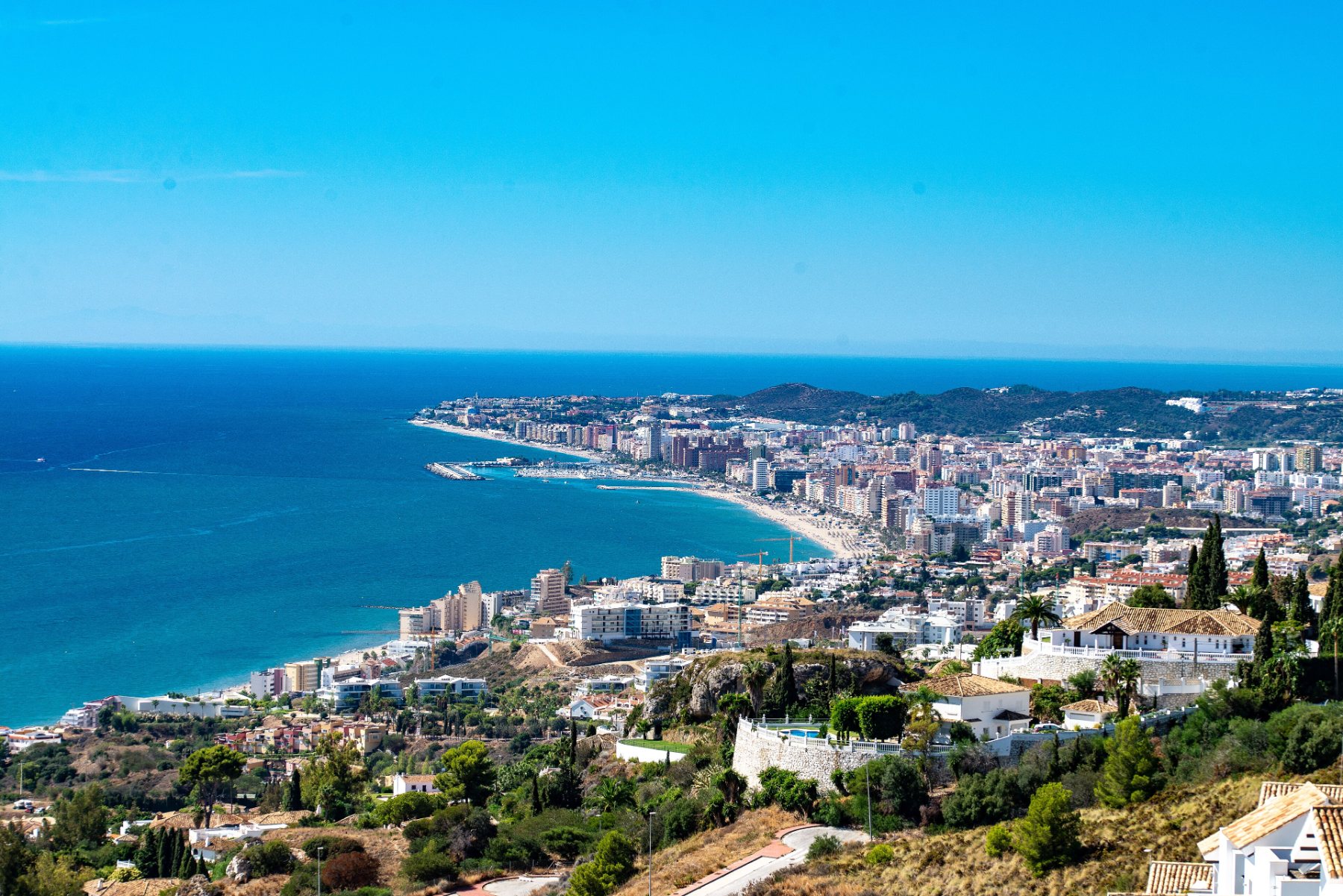
The sea in front, the mountains behind and the whole world sitting at the same café table. This is life in Fuengirola.
Some towns you visit. Others visit you.
They slip in through your window early in the morning, smelling of salt and fresh coffee, with a conversation in Finnish on the pavement opposite and a seagull with an opinion on everything. And one day, without noticing, you can no longer live without them.
Fuengirola is one of those. Small in size, barely 10.36 square kilometres, and huge in world. With the soul of a fishing village, some eight kilometres of coastline and a blend of accents that turns every stroll into a journey.
If you are looking for somewhere to move to, here is a little game before you read on: close the map for a moment and ask yourself what you want to hear tomorrow when you open the window.
Living in Fuengirola means having the Mediterranean as your neighbour, the airport half an hour away and the whole world just around the corner.
Living in Fuengirola: the Costa del Sol within strolling distance
Fuengirola lies at the heart of the western Costa del Sol, between Málaga and Marbella, right by the A-7 motorway. According to the Andalusian Institute of Statistics and Cartography, it is 29.9 kilometres from the provincial capital. Málaga Airport is about 25 kilometres away: around half an hour by car, depending on traffic.
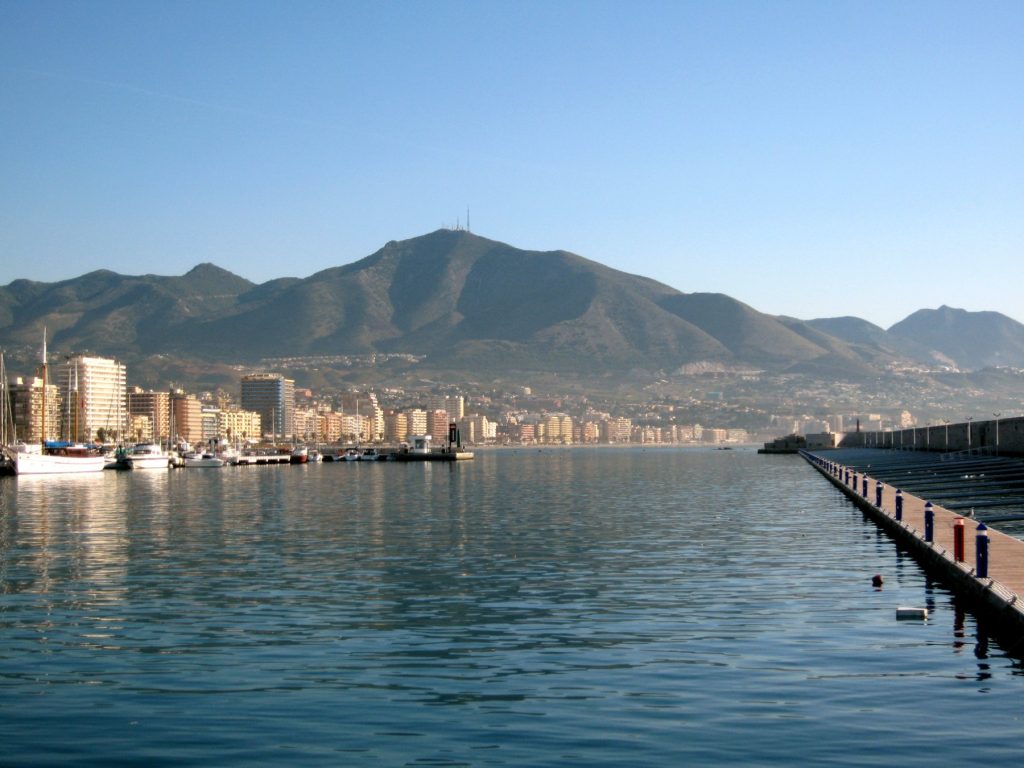
And here comes the detail that changes everything: Fuengirola is the last stop on the C-1 commuter train, which links it with Benalmádena, Torremolinos, the airport and Málaga. Within the town there are four stops: Carvajal, Torreblanca, Los Boliches and Fuengirola. From the airport to Fuengirola, the train takes about 33 minutes.
What does that mean in everyday life?
- Your guests land and half an hour later they are on your sofa, with no hire car and no juggling.
- Málaga for a concert or an exhibition, without battling for a parking space: hop on the train and off you go.
- Everything close at hand: in such a compact town, distances are measured in strolls.
- Sea in front, mountains behind: the blue horizon on one side and the sierra on the other.
Be honest with yourself: how many more hours of your life do you want to spend inside a car?
A small world by the sea: the nationalities that live in Fuengirola
This is the part that moves me most. Fuengirola is one of the most international towns in Spain, and that is not just a turn of phrase: the numbers say so.
According to the Andalusian Institute of Statistics and Cartography, in 2025 Fuengirola had 84,857 inhabitants, 31,808 of whom were foreign nationals: 37.5%, more than one in every three neighbours. The largest foreign community is the Finnish one, with 14.2% of foreign residents: about 4,500 people.
Looking country by country, the latest breakdown of the municipal register we have been able to consult, with INE data published in 2022, counted 128 different nationalities. These were the largest communities:
- British: 5,508
- Finnish: 4,657
- Moroccan: 2,763
- Swedish: 1,973
- Italian: 1,478
- Danish: 1,030
- Ukrainian: 903
- Norwegian: 717
- Chinese: 702
- Argentinian: 689
- Dutch: 670
- French: 653
- Romanian: 652
- Paraguayan: 610
Do the maths: these fourteen communities alone add up to 23,005 neighbours. And behind them, another 114 nationalities add their own accent.
An honest note: the register only counts those who are registered, and many people live here for part of the year. The Finns, for instance, have made Fuengirola their great home in the south: according to an analysis of the register published by elDiario.es, almost half of all Finns registered in Spain live here.
And how do you live alongside so much world? By celebrating it. Every spring the fairground becomes a journey around the globe with the Feria Internacional de los Países (International Fair of Countries), formerly the Feria de los Pueblos, which began in 1994 with just eight countries. In 2026 it held its thirtieth edition, from 29 April to 3 May, with 33 international delegations: stalls with the food, music and customs of each country, and free admission.
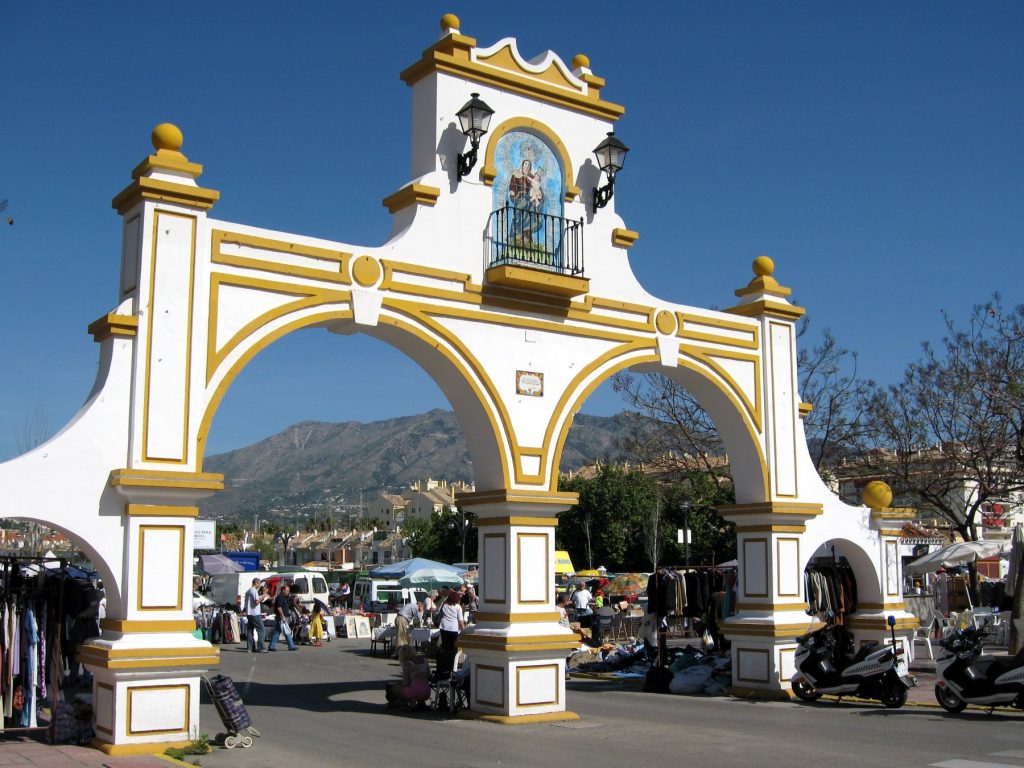
Here “good morning” sounds in many languages, but the coffee is drunk at the same table. That, quite simply, is a community.
Can you picture your children growing up with friends from five countries without leaving the neighbourhood? Or yourself discovering that “thank you” in Finnish is kiitos?
Fuengirola’s beaches: eight kilometres to choose your shore
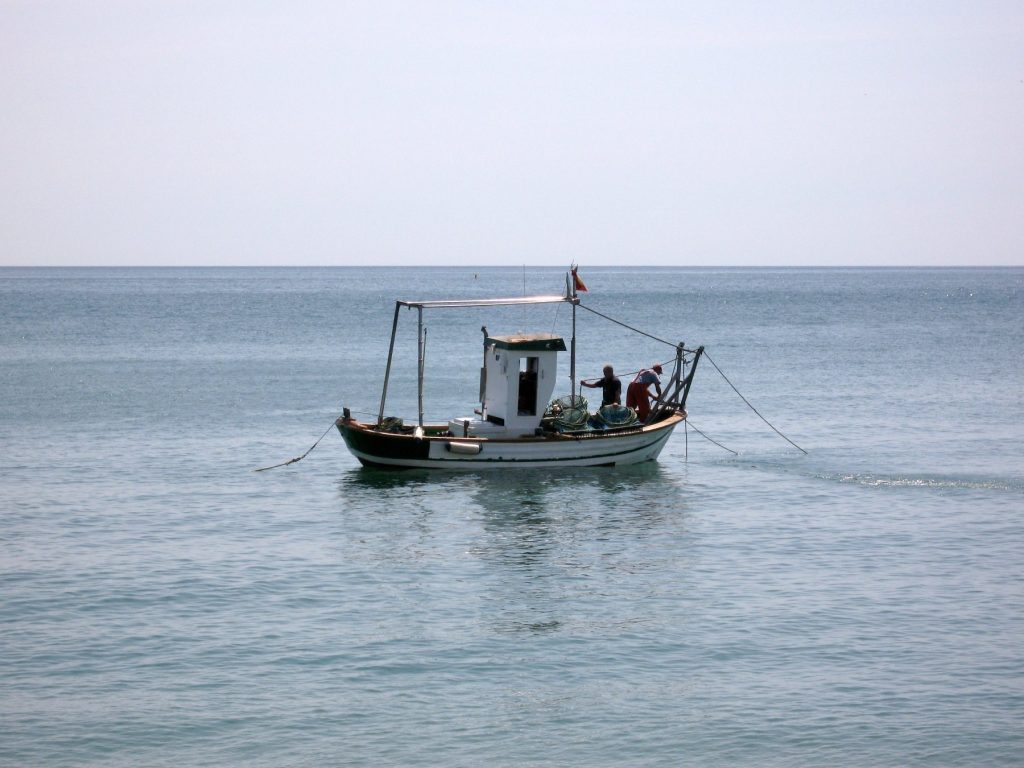
Fuengirola looks out to sea along some eight kilometres of coastline. From one end to the other its beaches follow one another: Carvajal, Torreblanca, Las Gaviotas, Los Boliches, San Francisco, Fuengirola-Santa Amalia and El Castillo, at the foot of Sohail Castle.
They are joined by a seafront promenade of more than seven kilometres, the Paseo Marítimo Rey de España: the most beautiful gym in the world for those who go running at dawn, and the longest living room for those who prefer an unhurried stroll as the evening falls. In 2026, Fuengirola is once again among the Costa del Sol towns with beaches awarded the Blue Flag.
And one more thing: here the beach is not a holiday plan. It is where you go on any old Tuesday after work, with your feet still thinking about the office and the water telling them to hush.
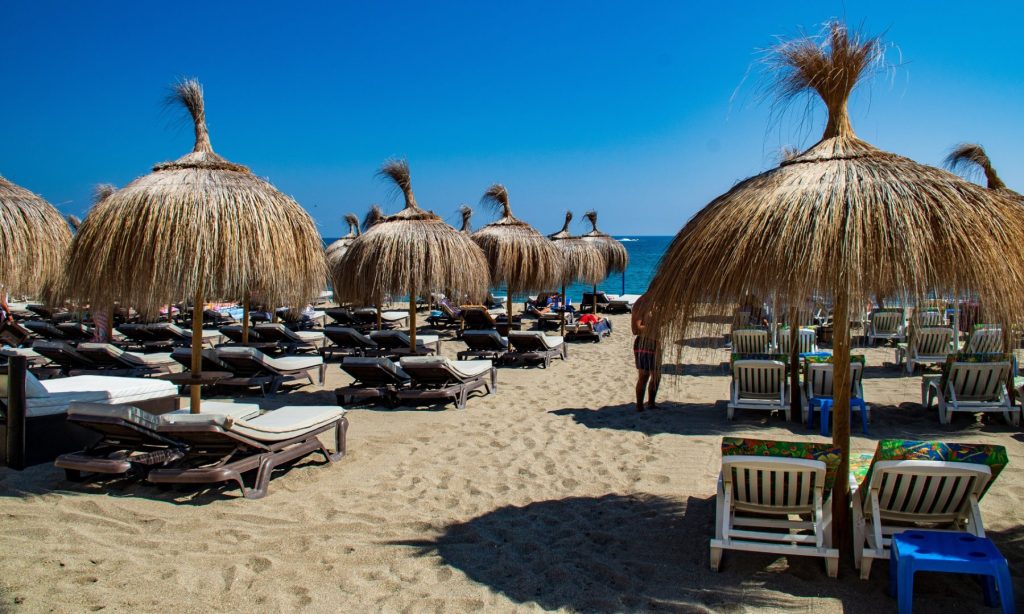
Which beach are you: the one for reading in silence, the one for chatting with the neighbours or the one for dipping your toes at sunset? In Fuengirola you can be all three in the same week.
A village that has kept its soul
With so much world inside, you might think Fuengirola has forgotten where it comes from. Not at all.
Fuengirola became independent from Mijas in May 1841, when its people lived mainly from fishing, farming and trading with the ships that anchored in the bay. That memory is still alive: the old port is still used by local fishermen, the Santa Fe de Los Boliches district keeps its deep seafaring roots and Pueblo López holds streets full of traditional Andalusian architecture.
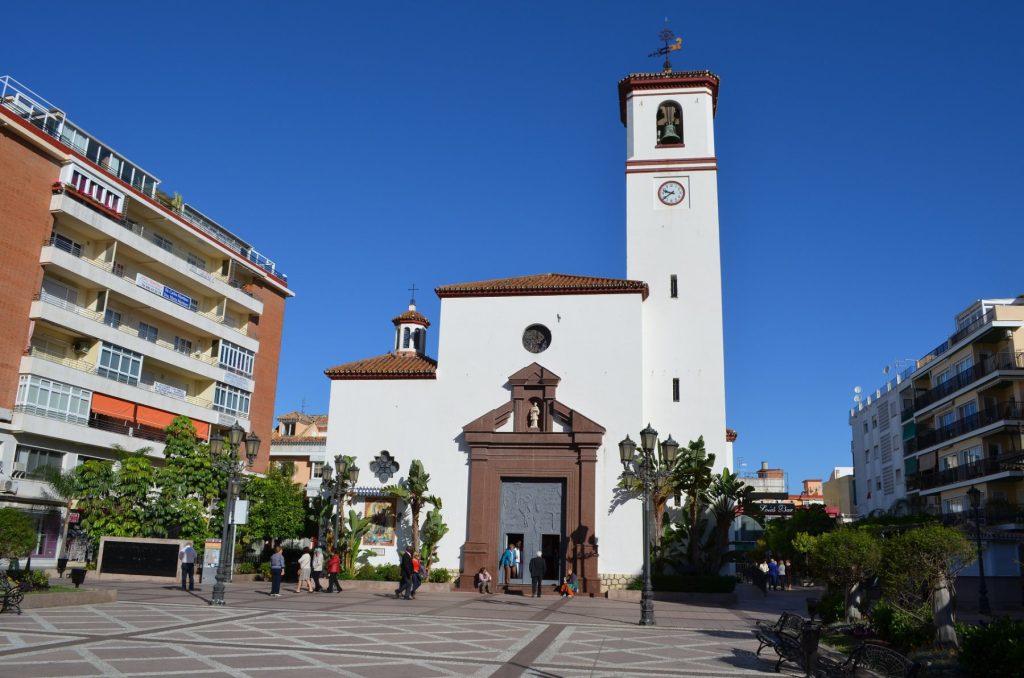
Its heart beats in the Plaza de la Constitución, presided over by the church of Nuestra Señora del Rosario. Cafés and shops gather there: the perfect spot for an unhurried coffee and a conversation that forgets the clock.
And every 16 July, Los Boliches proves that tradition is not a memory but a living custom: in the sea procession of the Virgen del Carmen, patron saint of sailors, the bearers walk into the sea carrying the statue on their shoulders. Since 2023 the festival has been declared a Fiesta de Singularidad Turística Provincial, a provincial tourist distinction. In October comes the Feria del Rosario, another of the town’s great celebrations.
Are you looking for a town, or for a place where you finally feel you belong?
When the sun goes down: Fuengirola by night
Fuengirola has two ways of living the night, and both fit in the same town.
The first is the seafront promenade, with its bars, terraces and music: the liveliest, most cosmopolitan atmosphere. The second is in the centre, around the Plaza de la Constitución, with bars and pubs with a more local feel, for those who prefer a less touristy night.
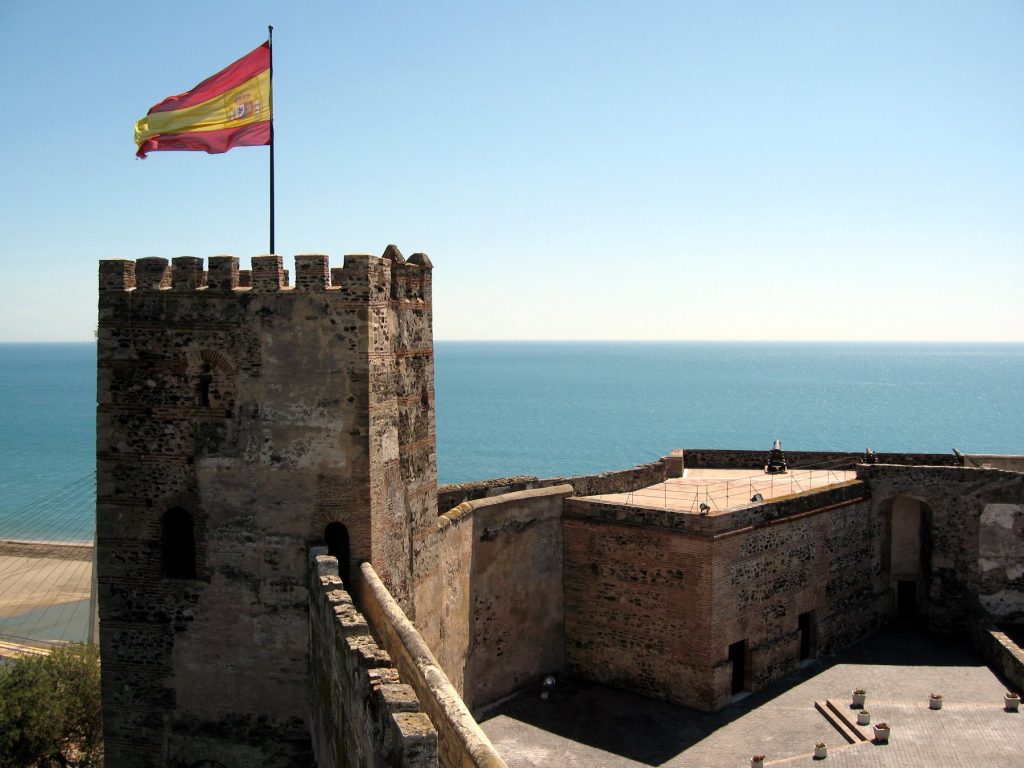
And in summer, Sohail Castle changes jobs. The fortress built on the orders of Abd al-Rahman III in the mid-10th century becomes an open-air concert stage for the Marenostrum Fuengirola festival, which held its tenth edition in 2025. Live music with a thousand years of history looking over its shoulder.
Do you want the party on your doorstep, or would you rather know it is there, a stroll away, for whenever you feel like it?
Food in Fuengirola: the sea, cooked over embers
As all along the Costa del Sol, fish is the star in Fuengirola: grilled, baked in salt, in the emblematic fritura (fried fish) and, of course, as an espeto.
The espeto is almost a ceremony: fish skewered on a cane, embers on the sand and that smoke announcing, better than any sign, that it is time to eat. Espetos and fried fish are everyday fare at the beach bars and seafront restaurants, especially in Los Boliches, and the stretch of promenade facing its beach is one of the most popular for tapas.
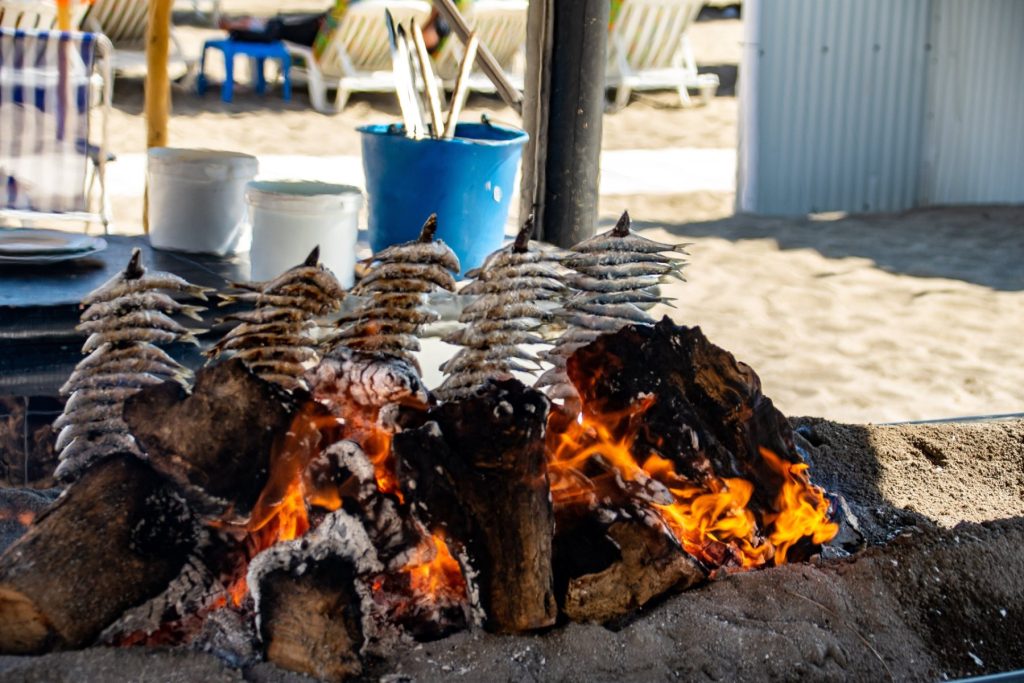
And thanks to that small world I was telling you about, in Fuengirola you can also travel around the planet with your fork: at the International Fair of Countries, each stall serves the food of its country.
What do you want your Sundays to smell of?
Before you decide: five questions to know whether Fuengirola is your place
Moving is not changing address. It is changing rhythm. So before looking at homes, here are five questions to ask yourself calmly, ideally with a coffee in front of you:
- Would you like the sea to stop being your holiday view and become your everyday view?
- Would you like to have the airport and Málaga a train ride away?
- Do you feel like living surrounded by accents, languages and customs from all over the world?
- Are you looking for the buzz of a town without giving up the warmth of a village?
- Would you like to spend a good part of your day outdoors?
If you answered “yes” to more than two, Fuengirola is calling you by your name.
Homes for sale in Fuengirola with Labella Luz
At Labella Luz we help you find your place in Málaga and on the Costa del Sol. In Fuengirola we currently have these two homes:
Renovated beachfront apartment (Ref. JLC076)
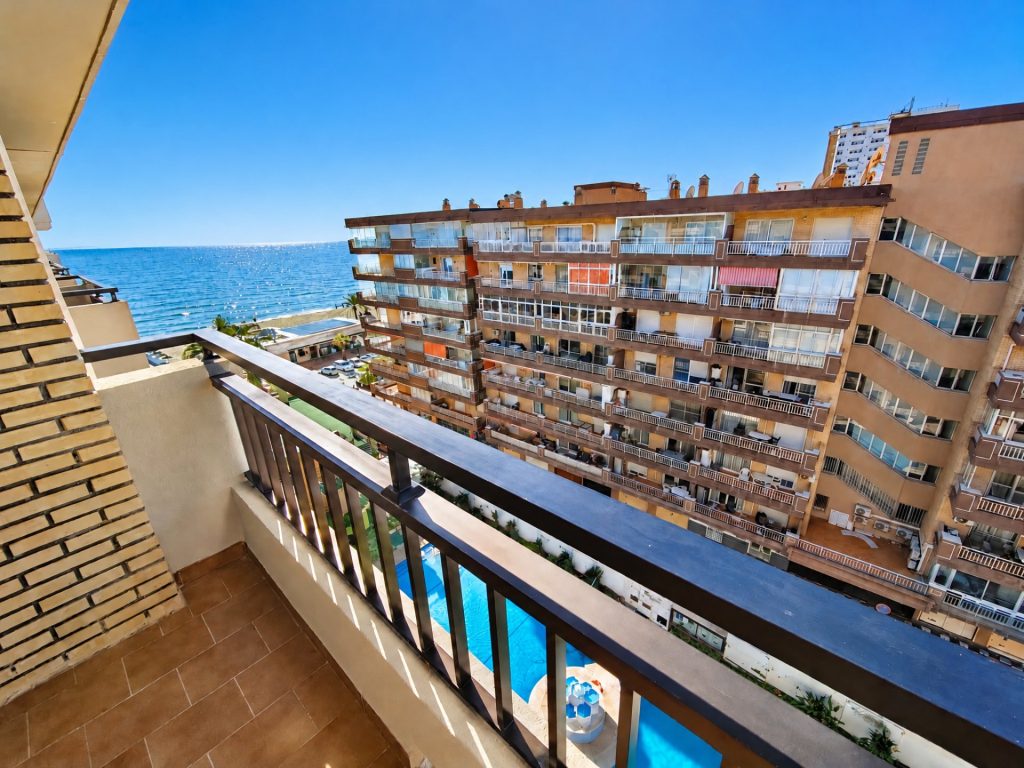
Imagine having breakfast on your terrace listening to the sea and walking down to the beach in a minute, without taking the car. It is on Fuengirola’s seafront promenade and fully renovated, ready to move into with no works: 48 m² built, 1 bedroom, 1 bathroom, living room with open kitchen, south-facing, air conditioning and a terrace with sea views. The community has a pool with garden. €335,000. See the apartment →
4-bedroom townhouse with communal pool and garage (Ref. JLC065)
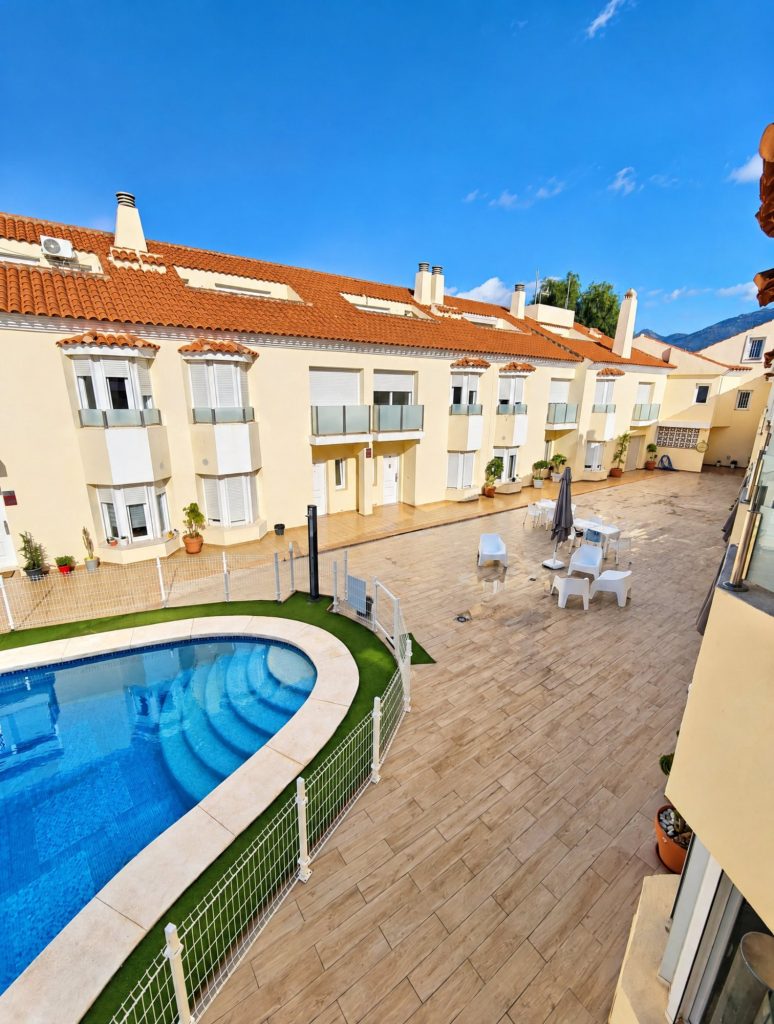
For family life, next to the fairground: an as-new townhouse with 180 m² built and 160 m² usable, over three floors and south-facing. Four double bedrooms, three full bathrooms, a spacious living-dining room, a large separate fitted kitchen, two terraces, two balconies, private garage, storage room and communal pool. Room for everyone and sunshine for all. €549,000. See the townhouse →
Every home has its story, and we take care of everything: we show them to you, answer your questions and accompany you all the way to signing. Write to us or call us on +34 673 724 645 / +34 663 86 86 89, also on WhatsApp.
Drawn to the greener side of the Costa del Sol too? Read our journal on La Cala Golf, Mijas Costa.
Frequently asked questions about living in Fuengirola
Where is Fuengirola?
In the province of Málaga, on the western Costa del Sol, between Málaga and Marbella. It is 29.9 km from the city of Málaga, according to the Andalusian Institute of Statistics and Cartography, and about 25 km from the airport.
How many inhabitants and foreign residents does Fuengirola have?
According to the Andalusian Institute of Statistics and Cartography, in 2025 it had 84,857 inhabitants, 31,808 of them foreign nationals (37.5%). The largest foreign community is the Finnish one.
Which nationalities live in Fuengirola?
The latest breakdown of the municipal register we have consulted, with INE data published in 2022, counted 128 nationalities. The largest groups were British, Finnish, Moroccan, Swedish and Italian.
How do you get to Fuengirola from Málaga Airport?
By the C-1 commuter train (Cercanías), in about 33 minutes, or by car, in around half an hour depending on traffic.
How many beaches does Fuengirola have?
It has about 8 km of coastline with beaches such as Carvajal, Torreblanca, Las Gaviotas, Los Boliches, San Francisco, Fuengirola-Santa Amalia and El Castillo, linked by a seafront promenade of more than 7 km.
Which homes does Labella Luz have for sale in Fuengirola?
A renovated beachfront apartment (Ref. JLC076, €335,000) and a 4-bedroom townhouse with communal pool and garage next to the fairground (Ref. JLC065, €549,000).
What if your next “good morning” is in Fuengirola?
Come and get to know it calmly: the sea in the morning, the square at midday, espetos at sunset and the night, if you feel like it. Then, if you wish, we will show you the homes. Write to us and we will organise your visit.
Druma Luz
La bella luz en tu hogar
Sources: Andalusian Institute of Statistics and Cartography (SIMA, 2025 data); INE, municipal register (breakdown by nationality published in 2022); elDiario.es; Tourism of Spain (spain.info); Aena; Wikipedia; The Objective; festivalesdeespana.com; MalagaCar and Barceló’s travel guide. Header image: Michael Gaylard · CC BY 2.0. Photos of the area: Wikimedia Commons, with the author and licence in each caption (some are shown cropped). Photos of the homes: Labella Luz.